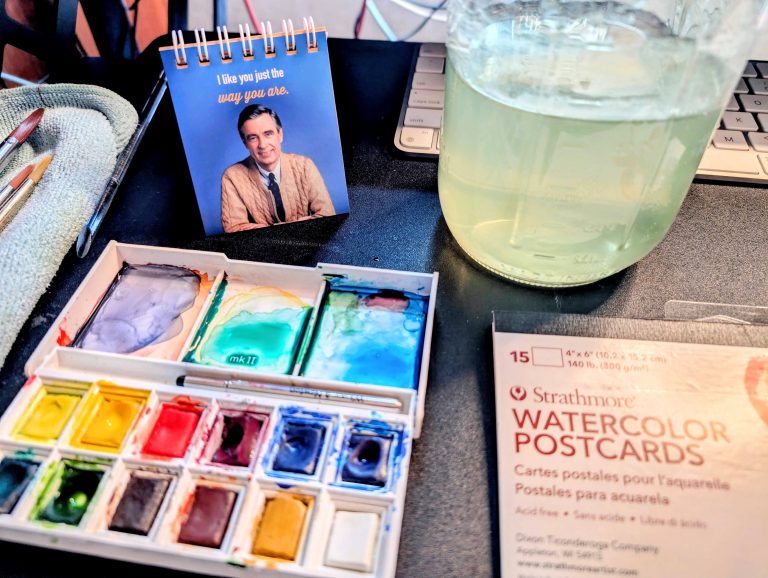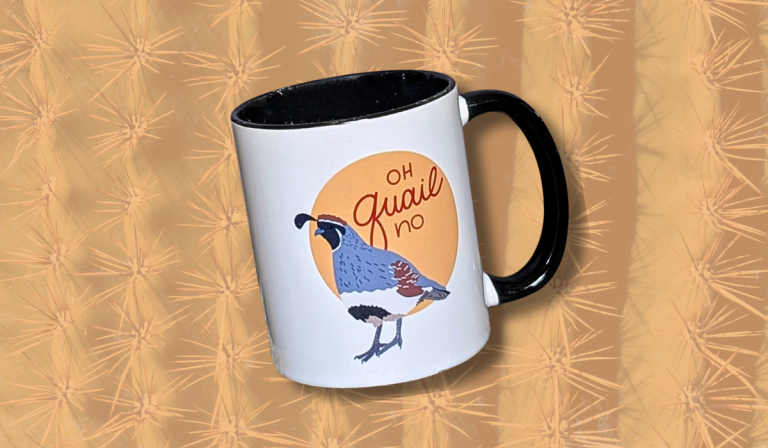

I didn’t become an artist in my 40s as part of some midlife crisis.
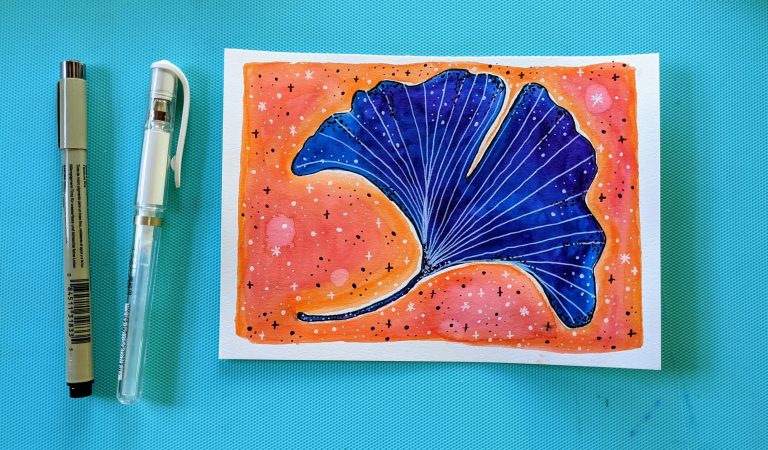
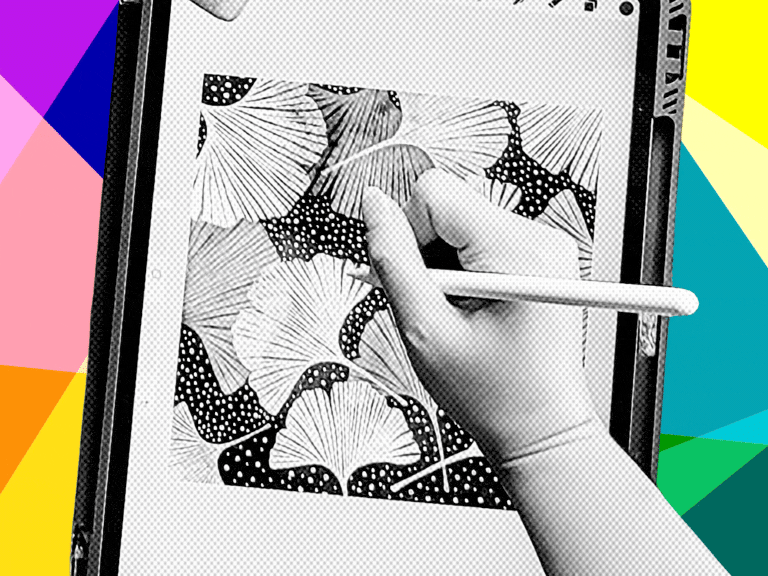
I’ve been drawing and painting since I could hold a pencil. In fact, making things has been one of the most reliable and consistent parts of my life.
What changed in my 40s is that I finally started taking it seriously. And getting there required burnout, an AuDHD diagnosis, and learning that the life I was supposed to want wasn’t going to work for me.
For most of my career, I was good at following a path that made sense to everyone else.
I kept trying to shoehorn myself into someone who could function comfortably inside conventional work. Art was something I’d get to in my spare time.
Eventually, I realized I didn’t need another credential or career plan. I needed to stop assuming the answer was somewhere outside myself.
That meant unlearning a whole bunch of stuff that wasn’t serving me anymore.

1 | I had to unlearn that the career I had the most credentials for was the career I was supposed to keep pursuing
I have a master’s degree in healthcare management. I earned it in 2012 after years working in medical equipment management, and by then I had built a pretty convincing case that it was what I was supposed to do with my life.
Then, three years later, I left healthcare to learn web development.
For a long time, that master’s degree felt less like an accomplishment and more like I was a quitter. I’d spent time, money, and effort becoming expertly qualified for a career I no longer had.
The logic of it felt simple. If I had invested so much into something, I was supposed to use it. Otherwise, what was the point?
But a degree isn’t a contract that says I have to do the same kind of work forever. I didn’t waste those years just because I eventually changed direction.
Credentials prove I learned something, but they don’t automatically decide what I do with it next.
2 | I had to unlearn that being good at something meant it was good for me
After I left healthcare, I went to Treehouse and completed a web development certificate.
Technology has always been easy for me. I can build websites and usually figure out new software without too much trouble.
After completing the program at Treehouse, I got a job as a support engineer for a company that places ads on blogs.
It was the worst job I’ve ever had.
I wasn’t new to demanding work, and I don’t scare off easily. But that job still managed to wreck me.
By the time I quit, my hair was falling out. I couldn’t sit at my desk without feeling sick, and I was so burned out I could hardly function.
The shocking part is that I was doing well with the work. I got a raise, and as far as I knew, my boss was happy with me. Because I couldn’t point to an obvious failure, I blamed myself for not being tough enough to handle the job.
For a long time, I treated being good at something as proof that I was supposed to keep doing it. If I could do work well that other people valued, walking away felt like a waste.
Being good at the work didn’t mean the work was good for me.
3 | I had to unlearn that being different meant I was lacking
I’ve always known I was different from the people around me. I just never had words for why, so I believed the messages I was given.
I wasn’t trying hard enough. I was lazy. I was too sensitive. I failed at things that seemed to come naturally to everyone else.
I really thought aliens had dropped me off on Earth and would eventually come back to take me to whatever planet I belonged to.
After I burned out, I went to therapy so I could fix it and go back to work. And after working with a therapist for several years, I found out that I made it through four decades of life without knowing I was autistic and lived with ADHD.
Those are pretty significant pieces of information to be missing about oneself.
Suddenly, things I’d spent my entire life treating as personal failures had perfectly logical explanations.
I’d been trying to function in a world that wasn’t built with my brain in mind. And doing a pretty amazing job of it without even knowing that’s what I was doing.
Being different doesn’t mean there’s something wrong with me.
4 | I had to unlearn that going back to a conventional career was the only responsible thing to do
Once I started feeling better, I fell right back into my old pattern. Get a job, make myself fit, and call it recovery.
I updated my resume and started applying for jobs in healthcare and tech, because those were careers I already knew how to have.
But I wasn’t the same person I’d been before burnout.
I found it much harder to do what’s called masking, which is hiding traits I have that don’t help me fit in. And that became painfully obvious during job interviews.
I was too honest. Employers didn’t like the gap in my work history, and they didn’t like hearing that I spent my time off work taking care of myself for the first time.
At first, I was really frustrated with myself. But over time, I realized I wasn’t getting rejected. I was being redirected.
The version of me who came out on the other side of burnout wasn’t a good fit for the old life I’d spent years squeezing myself into.
5 | I had to unlearn that my art had to be financially successful before I could justify taking it seriously
I went through a six-month art business mentorship program. I built an artist website with a shop from the ground up. I’ve been posting on social media, and I’ve spent a lot of time and effort on search engine optimization.
I’ve sold a few things on platforms like Zazzle, but my shop hasn’t taken off yet.
Old me would have considered that and thought, well, I failed at another thing.
But new me is grateful for everything the last couple of years have taught me about myself and my work.
I’m excited to see where this chapter of life will take me. And I’m proud that I’ve been letting people see me and my work, even though every fiber of my being would rather I keep both to myself.
A slow start to my shop is a business problem to figure out. It isn’t a verdict on whether or not my art deserves time and effort.
For too many years, I looked outside myself for proof that I was making the right choices.
A degree meant I was qualified. A good performance review at work meant I was doing well. A job offer meant I had worth. A paycheck meant I was spending time on something worthwhile. If I could point to something I did that other people recognized as success, I could trust it.
I did everything right on paper and still ended up with a life that wasn’t working for me. And no, I’m not saying I can pay my mortgage with personal fulfillment alone.
But I’m also not willing to use titles, credentials, income, and other people’s approval as the only pieces of evidence that I’m headed in the right direction anymore.
Peery Creative is the first thing I’ve tried after figuring that out. I don’t know what it will become, and I’m sure I’ll change my mind 82 times along the way.
The difference is that I’m no longer waiting for a degree, an employer, or big sales numbers to tell me I’m allowed to keep trying things.
When my brain does this, I use that
If your brain runs 12 tabs and forgets what it opened the first one for, this free guide is for you. I’m AuDHD and these are the 10 tools I use every day.
Browser extensions, apps, and websites that work with a neurodivergent brain instead of against it.