
Whenever I tell people I live in the desert, they imagine something like the Sahara. Vast amounts of sand, sun, and endless sky with no life in between.
And every “desert” palette you can download has the same played-out swatches. A sandy beige, a terracotta, a burnt orange, a dusty rose, a faded teal, and one called “saguaro,” which is just sage green with the saturation pulled down.
People grab those swatches, drop them into a piece that’s supposed to be Tucson, and end up with something that could be Morocco, or a Pottery Barn catalog, or the inside of a Chipotle.
I’m not sure why. Maybe TV and movies have given people some preconceived notions about what a desert is or should be.
The truth is that the Sonoran Desert is green. Here in Tucson, we have four seasons, grass, flowers, snow, and a color palette that’s been surprising me for years.
To show my appreciation for the beautiful place I live, I’ve created five color palettes based on landscape and wildlife photos I’ve taken around Tucson to inspire your next project.

1 | A Desert Sunset in Unexpected Colors
Every sunset in the desert is beautiful, but clouds tend to enhance the majesty.
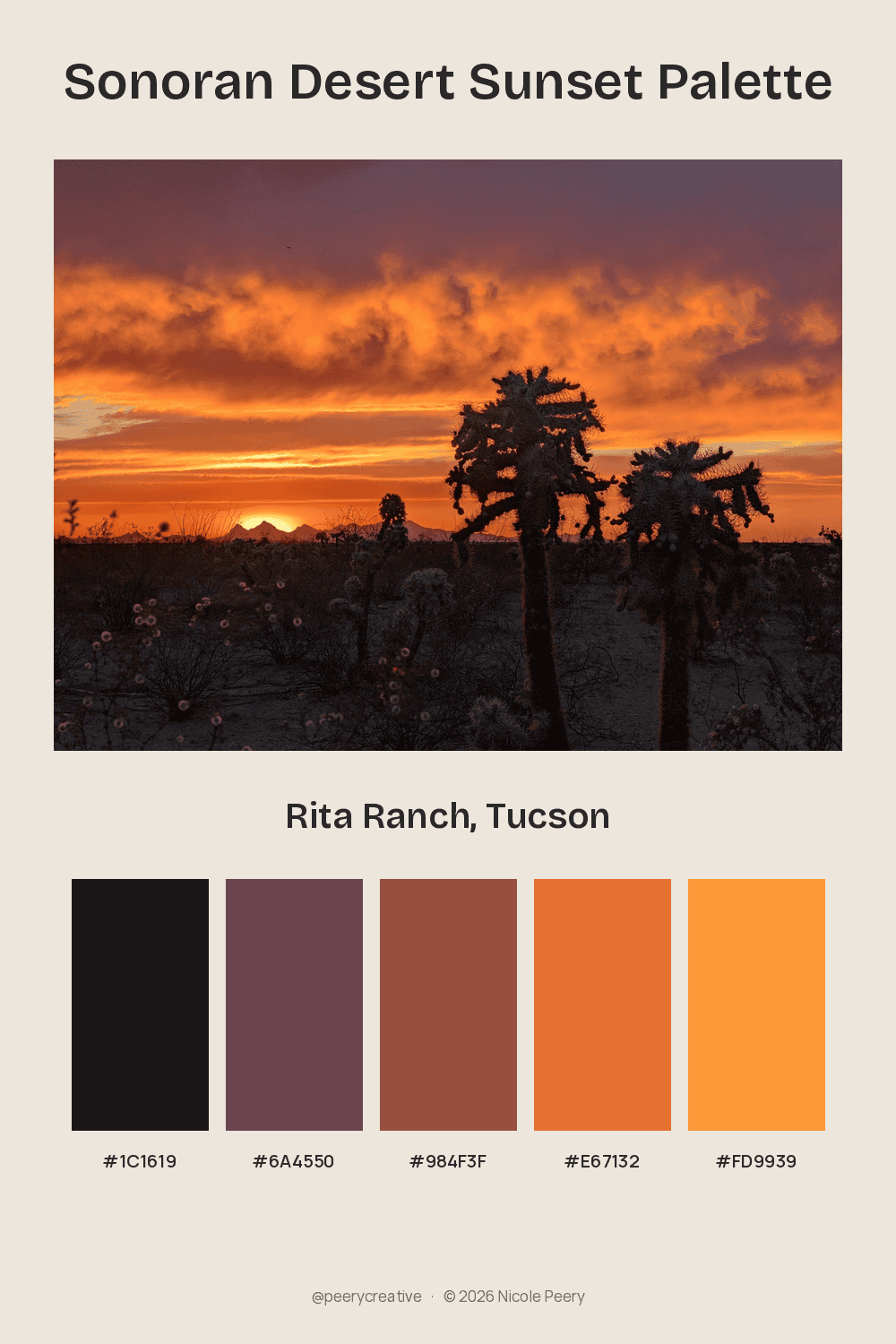
I captured this Sonoran Desert sunset from the cactus garden at our RV park on the edge of town. We go on walks out there at sunset to look for critters, and most people would look at that stretch of creosote, prickly pear, and cholla and see a whole lot of nothing.
It’s a piece of state trust land that recently got annexed into the city and rezoned for industrial use, so we’ll probably be losing it soon.
We see birds, jackrabbits, snakes, and all kinds of cool desert wildlife. Until the annexation, we had free-range cattle out there, which gave it a wonderful Wild West feel.
I’m glad I have photos like this one to remember this piece of desert by. The sky above those clouds turned purple, and I’ve never once seen that color in anything someone’s called a “desert sunset palette.”
2 | Pink Snouts and Gold Cattails at Sweetwater Wetlands
In Tucson, javelina are part of everyday life. What are javelina? Most people mistake them for pigs, but they’re peccaries.
If you live near a wash, you’ve probably already had them in your yard. They travel in family groups known as squadrons, and their babies are called “reds” due to the rusty appearance of their fur. Javelina are notorious for eating your cacti and breaking into trash cans.
These collared peccaries excrete a skunky-smelling musk from a gland on their backs, so you usually smell them before you see them.
While they’re wild animals and you definitely want to give them space, they’ve adapted to urban habitats. Most people only have javelina problems when javelina are trying to defend their babies or when dogs are involved.
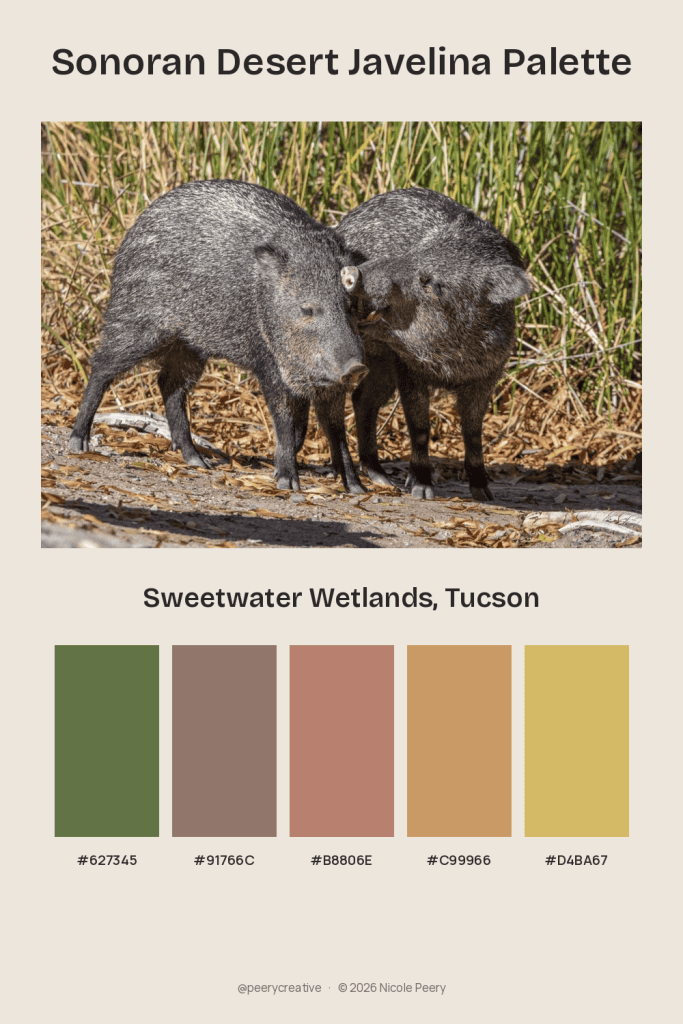
Javelina have poor eyesight and aren’t interested in interacting with humans, but they can’t distinguish between a coyote and a domestic dog.
That causes problems when people walk their dogs in Tucson neighborhoods and gives javelina an unfair reputation for “being aggressive” when they’re only trying to defend themselves against what they see as a predator.
Sweetwater Wetlands, a water-recharging facility in Tucson, provides a wonderful habitat for javelina and many other wildlife species.
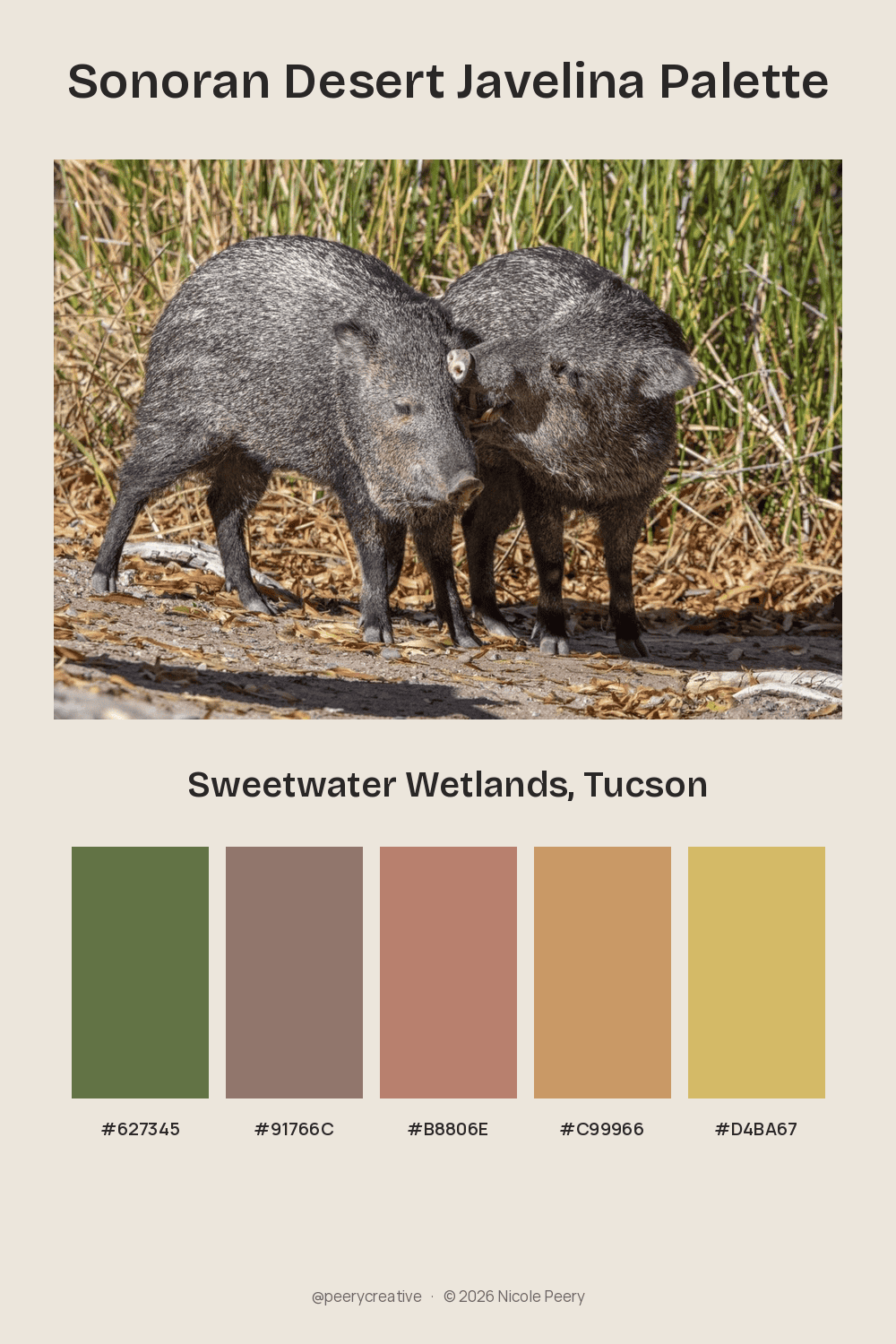
I caught these two bonding there. Javelina coats are salt-and-pepper, with a lighter collar around the neck (hence the name “collared peccary”). Their snouts are pink, which is my favorite thing about them.
They hung around for a while and eventually disappeared somewhere in the cattails.
3 | Colorful Birds in a Magical Place You’ve Never Heard Of
Every season, at any time of the day, I have, on average, 3-4 hummingbirds buzzing around my feeders.
These tiny acrobats have big personalities and come in many colors. They’re always a joy to have around.
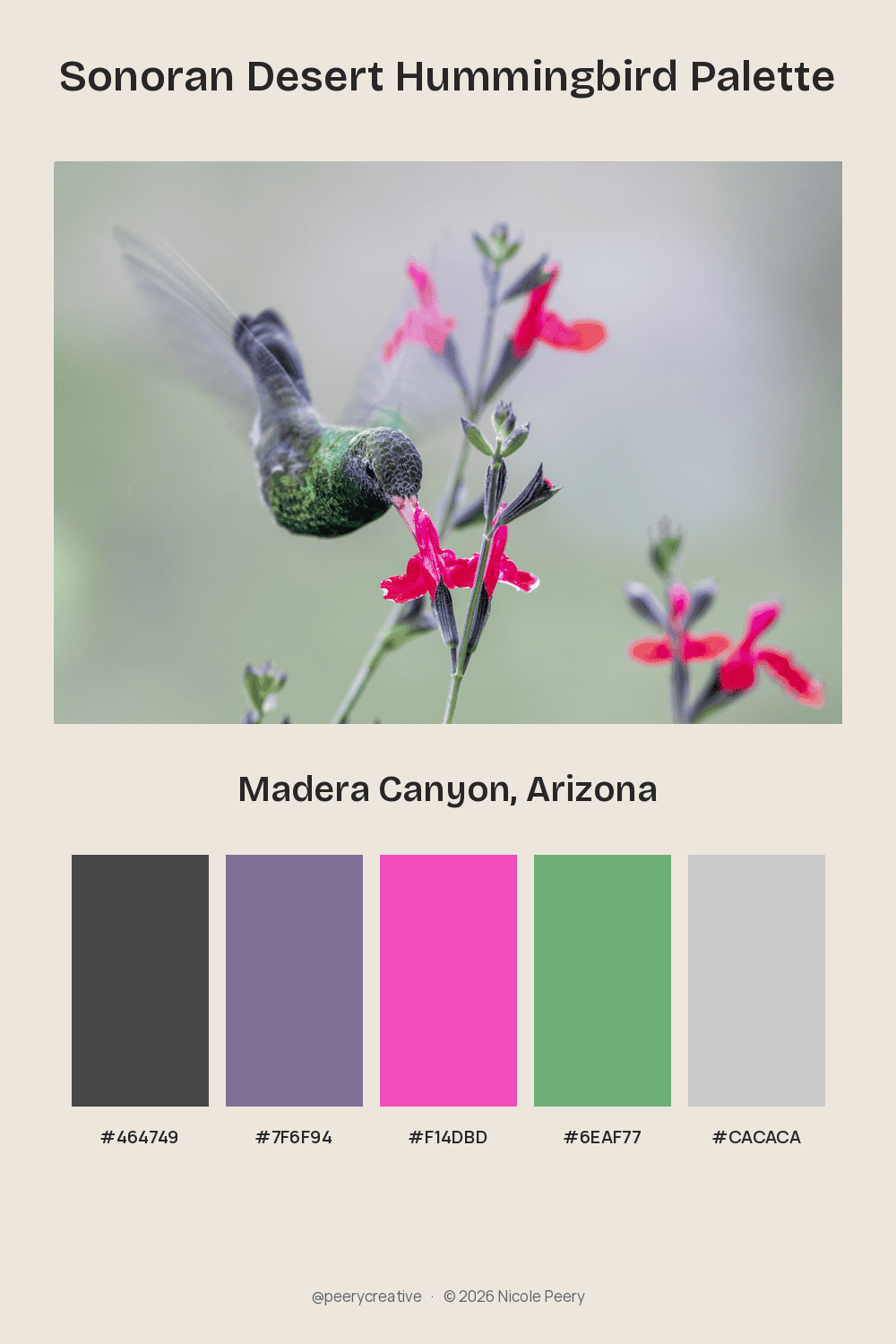
This broad-billed hummingbird was photographed outside the visitors center at Madera Canyon, a beautiful area south of Tucson that gets almost no press and never shows up in travel brochures.
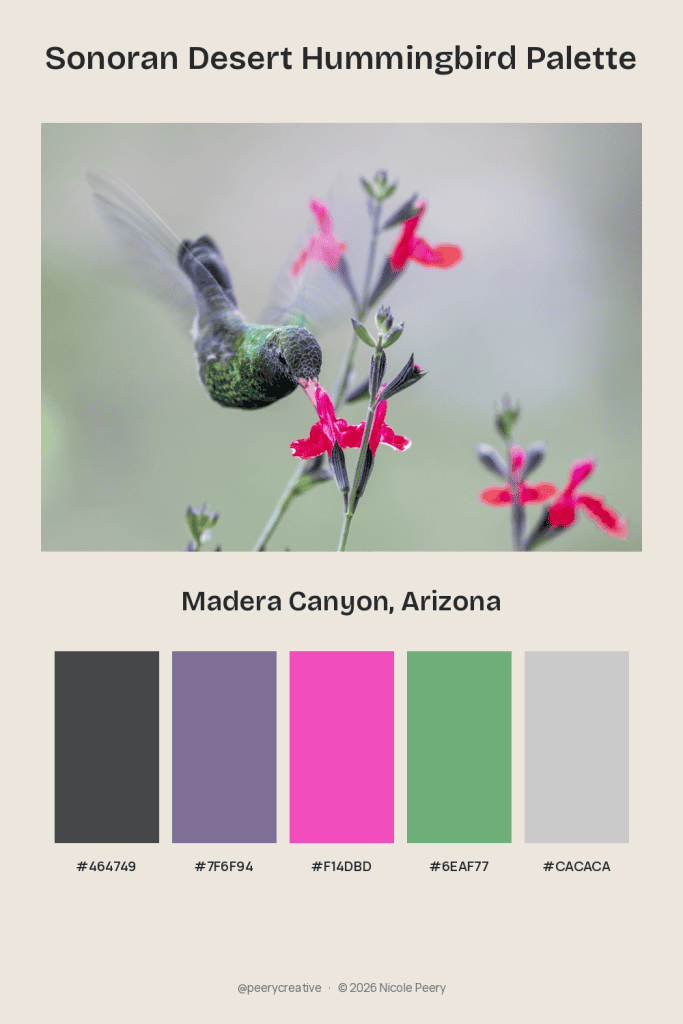
It’s home to sky islands and incredible wildlife, and we drive down there on weekends for the cooler temperatures and what I can only describe as nature therapy.
It’s green all year, but especially during the monsoon. It straight up looks like Jurassic Park.
The Sonoran Desert has birds that look like they belong somewhere with twice the rainfall. The broad-billed hummingbird is one of my favorites to make that point, and Madera Canyon is one of the best places to find them.
4 | Monsoon Storm at Golden Hour
In Arizona, we’re closer to the ocean than people realize. And with the ocean comes weather. For us, it’s the summer monsoon.
Monsoon brings powerful thunderstorms that can go from a clear sky to a full severe storm in under two hours. The lightning is spectacular, the flash flooding is serious, and the microbursts (intense downward bursts of wind that spread outward when they hit the ground) can take down trees.
Before the rain arrives, the storm’s gust front picks up desert dust and sometimes pushes it ahead as a haboob, a rolling wall of dust that can block out the sun.
After it all passes, temperatures drop 20 degrees, and the desert smells like rain and wet creosote (which is one of the best smells in the world if you ask anyone who lives here.)
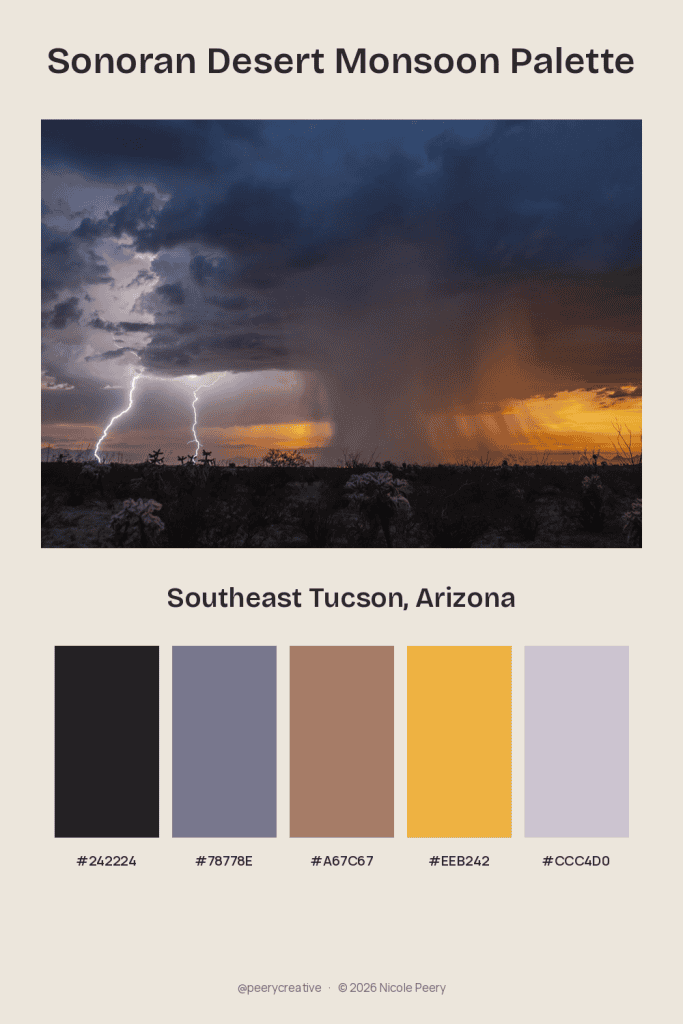
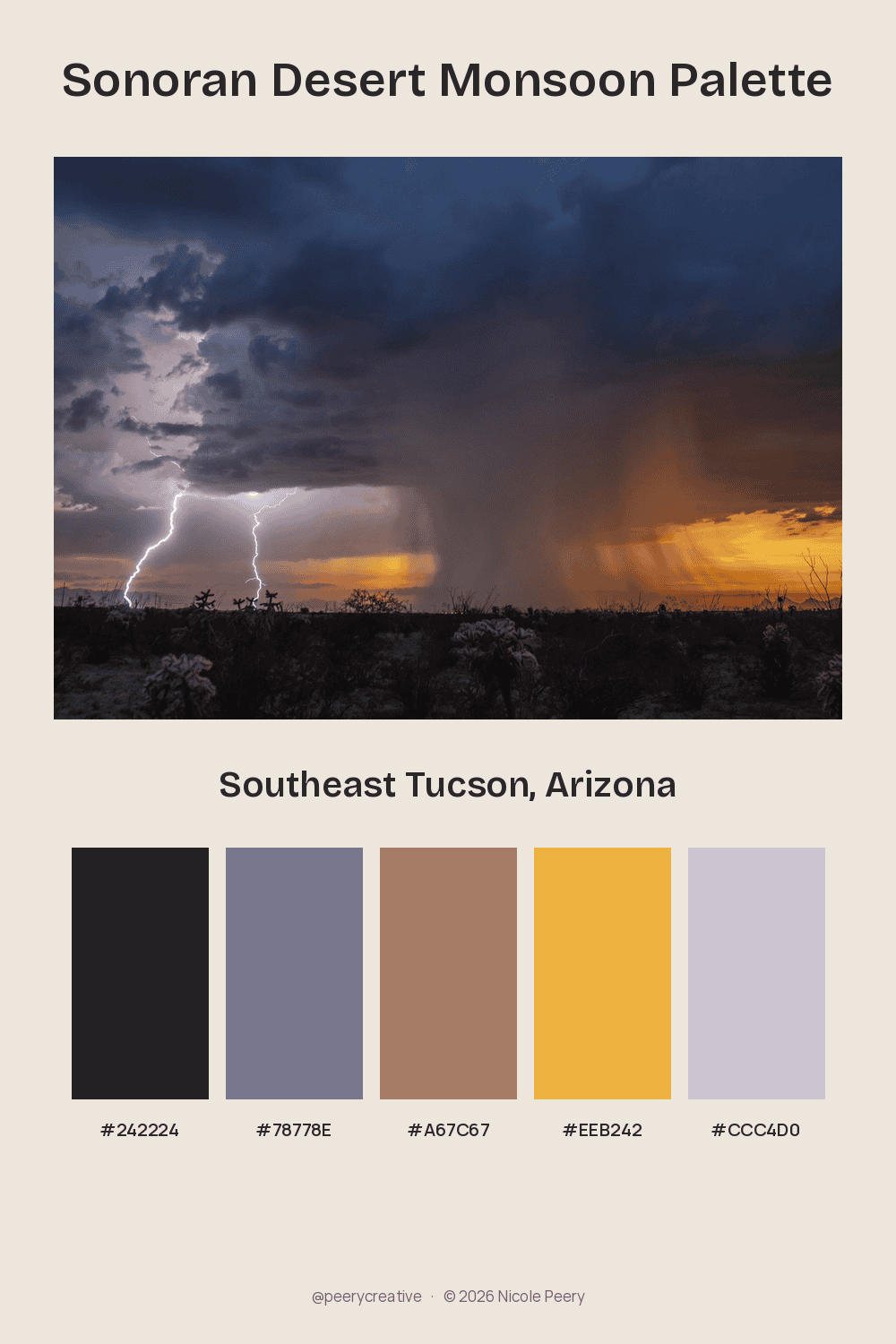
One of the things I love most about monsoon is that it makes the desert worth exploring in the middle of summer. This storm rolled through southeast Tucson near sunset, and I came home with rain, lightning, and a sunset all in one shot. Many times there are rainbows, too.
What strikes me about a monsoon sky at sunset is how many colors are in it. The storm is dark and dramatic on one side, and warm gold sits right at the horizon where the sun hasn’t gone under yet.
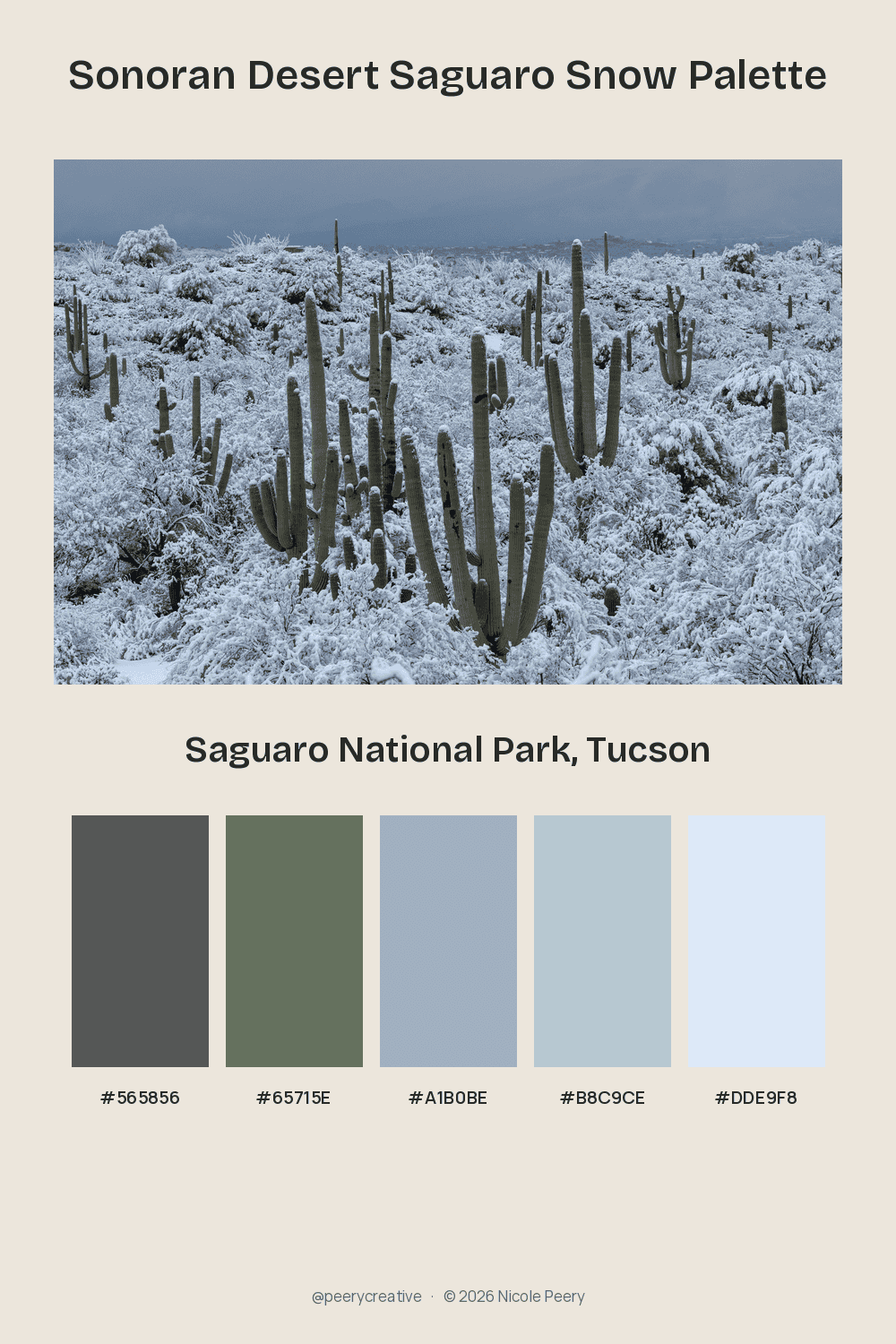
5 | Saguaro Snow Day
Yes, winter really does happen in the desert! While snow rarely reaches the valley floor, we see it on our mountains every year.
Snow falling at saguaro level is a rare spectacle. It happens only once or twice a decade, vanishes quickly, and by the next day, you’re back in shorts.
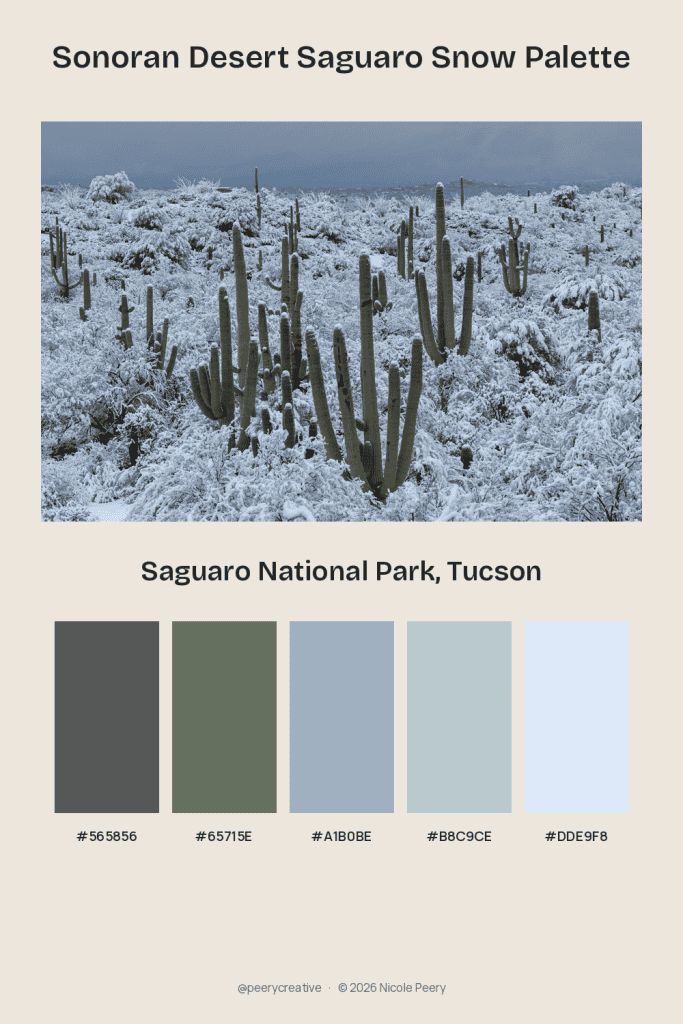
Saguaro National Park stretches across both sides of Tucson, and when snow descends to around 3,000 feet, the result is one of the desert’s strangest and most beautiful sights. Every cactus arm is lined with a frosty white edge.
Saguaros, towering up to 40 feet, balance snow on their tops like whimsical hats. I rushed out to photograph it, knowing it would disappear before I’d finished my morning coffee.
Set against all that desert green, the landscape turns almost entirely cool-toned (a striking contrast in a place that sizzles at 110 degrees come June.)
I hope you enjoyed these color palettes and the short stories behind them.
I’ve been photographing Arizona for years, and these palettes felt like a fun way to share some of the color notes I keep returning to in my own work.
If you use one of these desert color palettes in your next project, I’d love to see it! Tag me on Instagram with @peerycreative.
When my brain does this, I use that
If your brain runs 12 tabs and forgets what it opened the first one for, this free guide is for you. I’m AuDHD and these are the 10 tools I use every day.
Browser extensions, apps, and websites that work with a neurodivergent brain instead of against it.