
I’d love to tell you this site runs on the power generated from my last hyperfocus session. But since my host only accepts cash money, I use affiliate links for products I love. So if you go on a dopamine-seeking spending spree using my links, I may earn a commission. It keeps this site running (and occasionally funds a new keyboard because I spilled coffee on mine while Googling “how to be a functional adult” at 6 a.m.)
In 2017, I sold my house, moved into a motorhome, and drove it from Indiana to where I live now in Tucson.
It was one of the most exciting, stressful, life-changing, and totally worth-it things I’ve ever done. But it wasn’t all rainbows and kitten farts. I had to make a lot of sacrifices to get it done, and one of those sacrifices was space.
While no longer having closets full of junk doesn’t bother me, I miss having a dedicated space for artmaking.
In my house, I had an office that doubled as a studio. But my current living space is around 400 sq. ft.
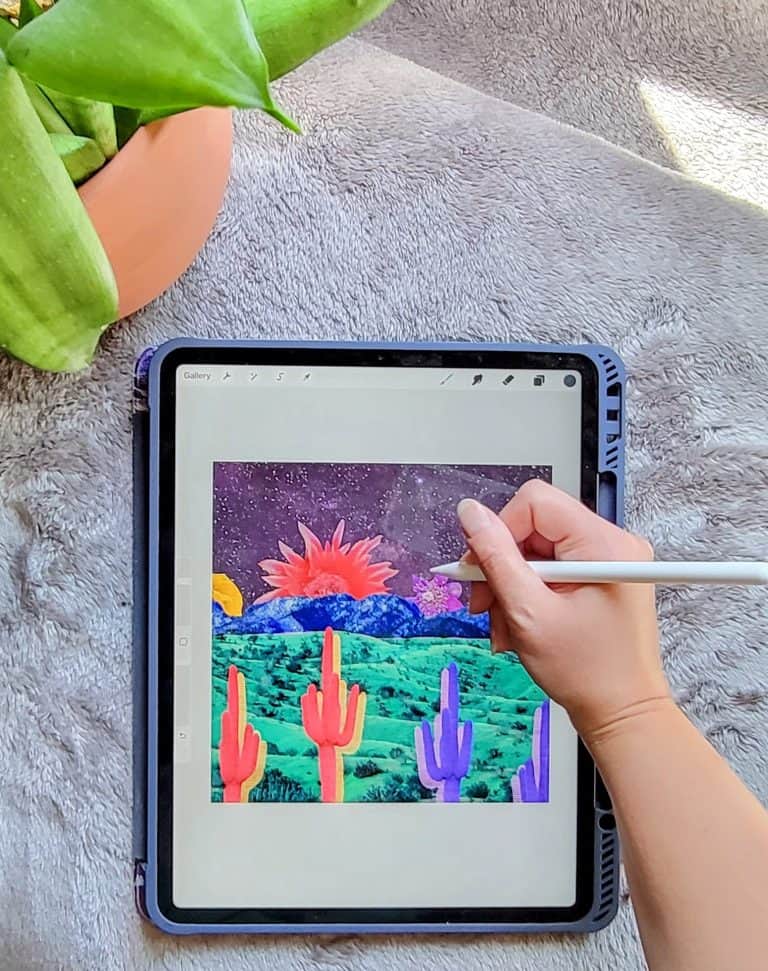
My art-making area has been significantly diminished, and I’ve had to get creative with the supplies I use. Over time, I’ve figured out which supplies work well in a small space and which ones just get in the way.
Finding the right art supplies for small spaces changed everything about how I work. And these are the art supplies I’ve come to rely on as long as I’m working without a studio.

The Best Art Supplies for Small Spaces
Caran d’Ache Neocolor II Water Soluble Pastels
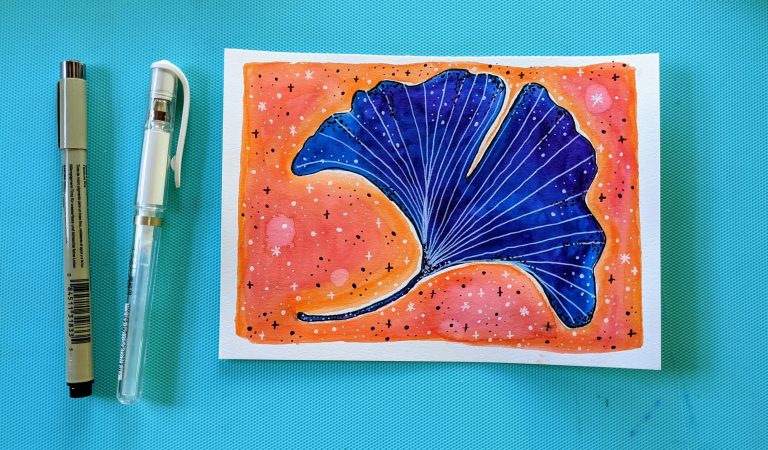
These pastels are water-soluble, which means you can draw with them and leave them dry or activate the pigment with water (which makes the result look a lot like watercolor paint).
They come in a flat tin so they can be kept in a drawer or thrown in a bag, and they last a long time because you don’t need to use much of each pastel to put down a lot of pigment.
I’ve had the same set since 2018 and I still haven’t hit the bottom of burnt sienna, which is saying something considering I use it approximately every third painting.
The tin is about the size of a slim paperback, which means it fits in places a full watercolor palette wouldn’t dream of fitting (like the side pocket of a backpack or wedged between my laptop and a stack of half-finished sketchbooks in a drawer).

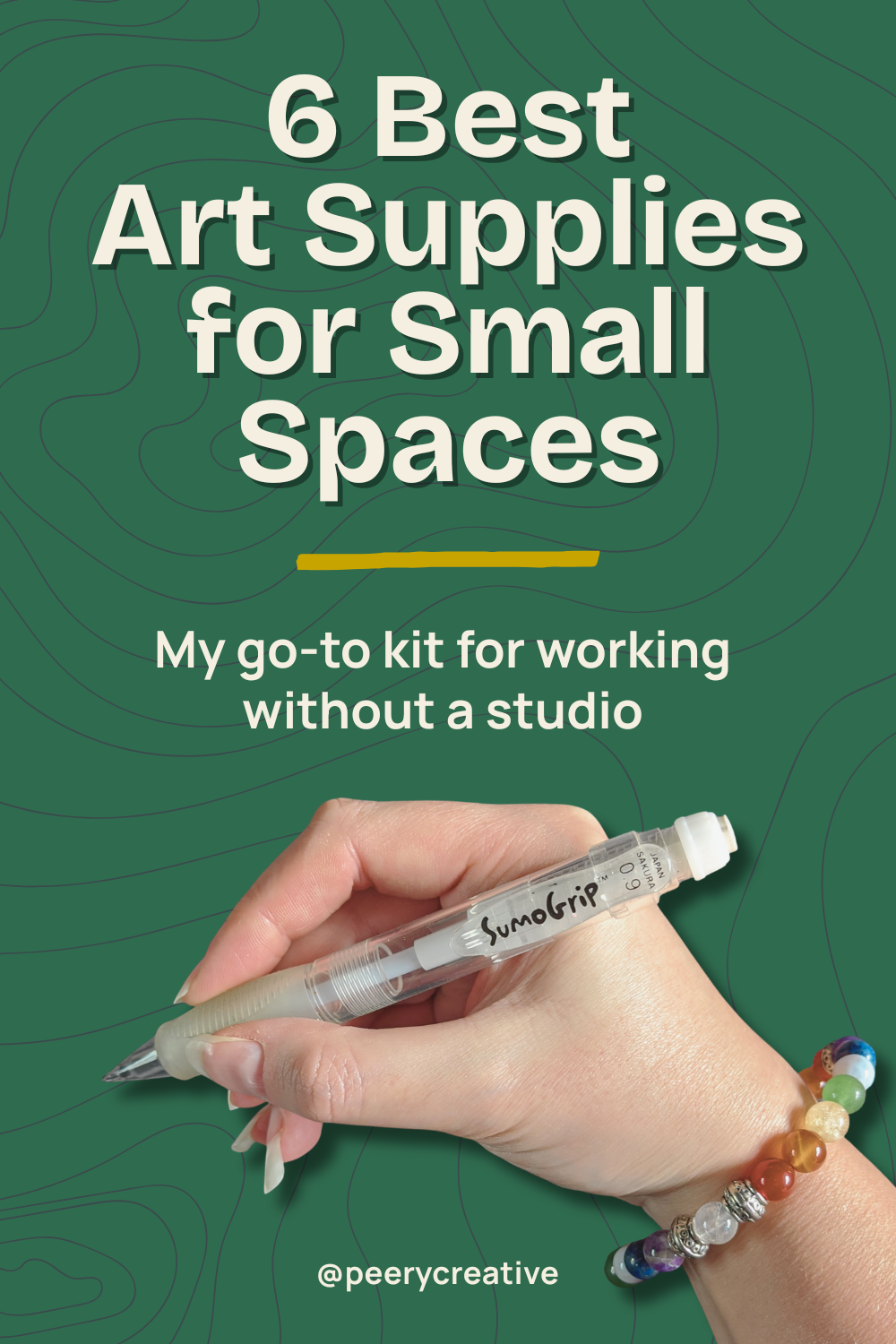
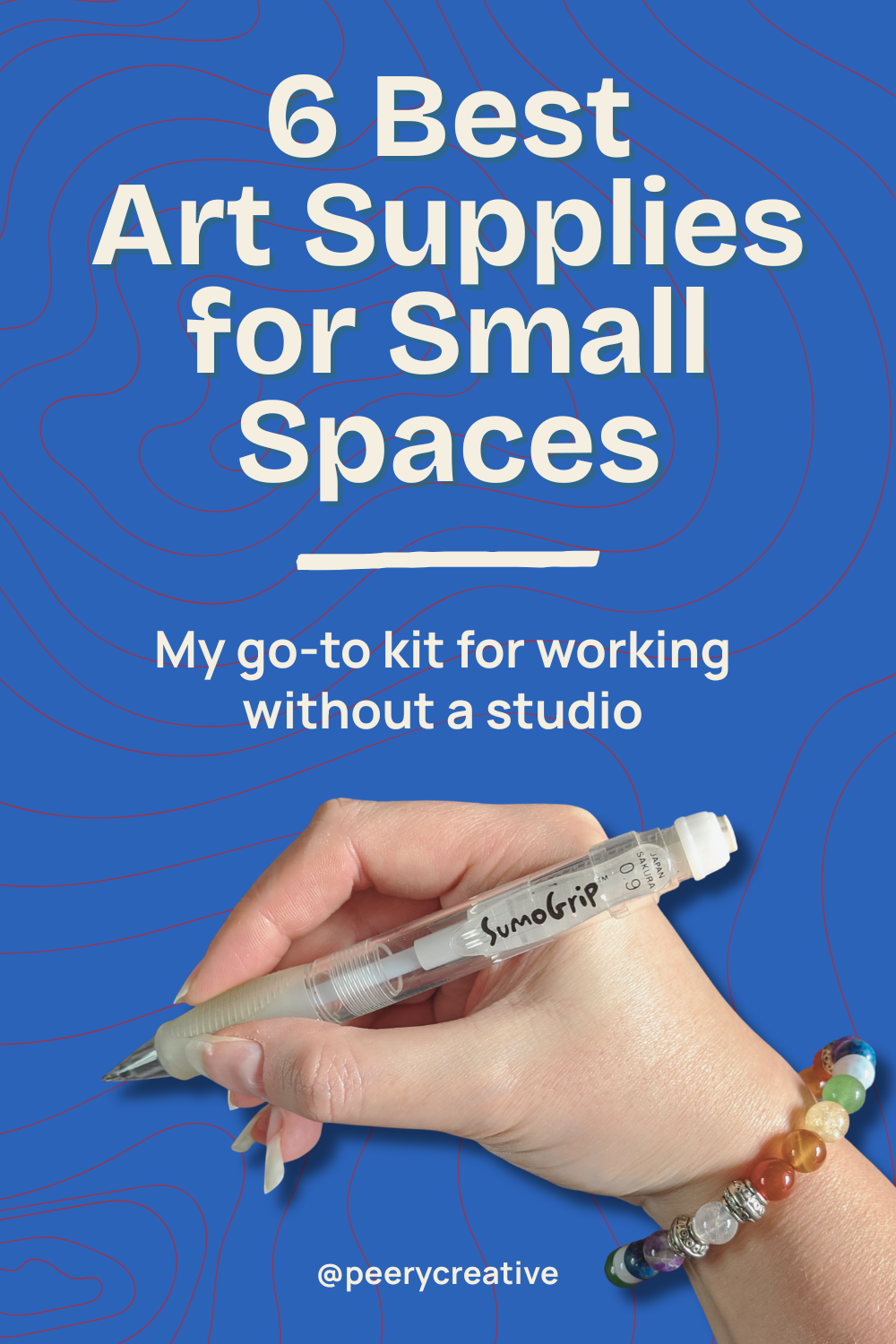
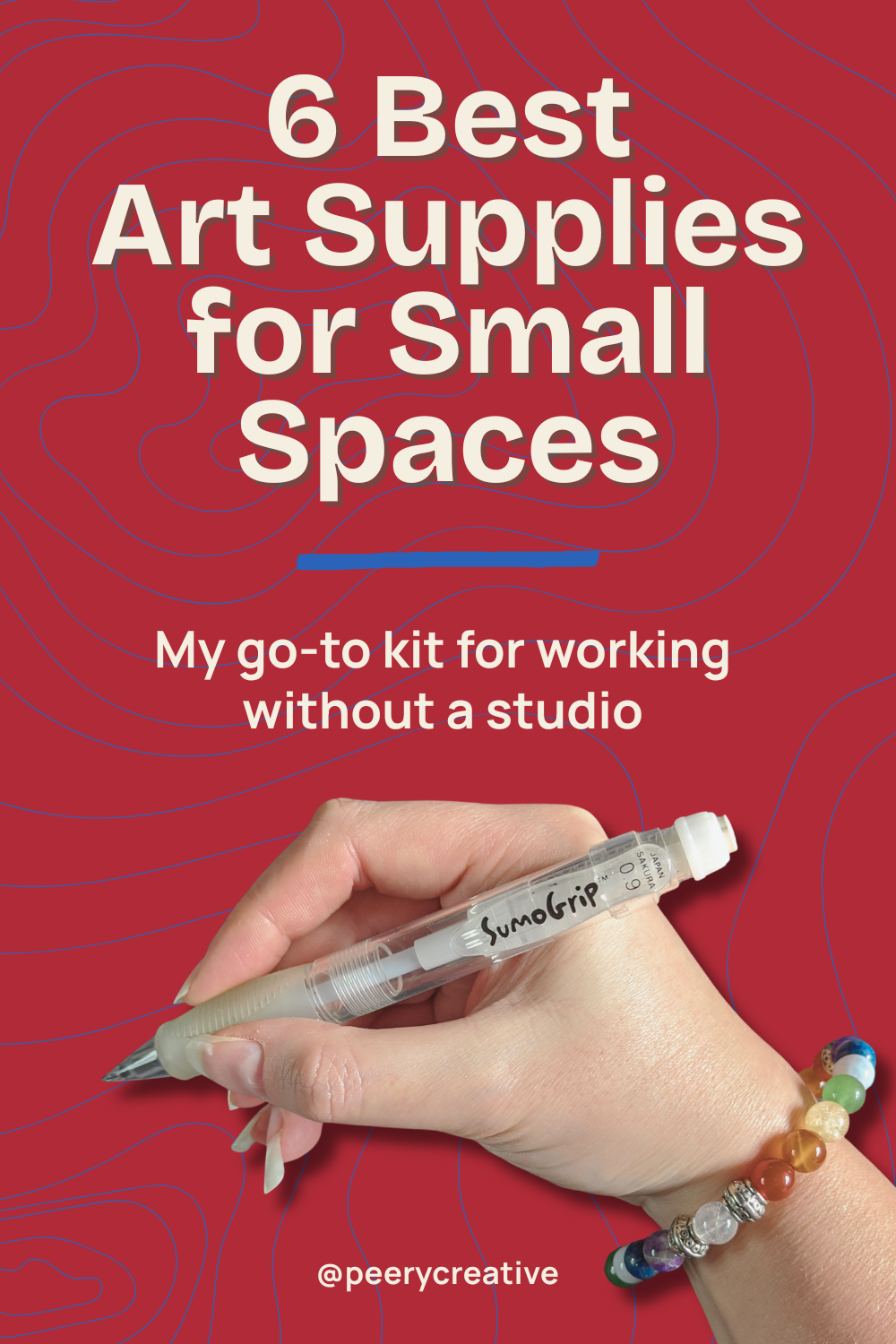
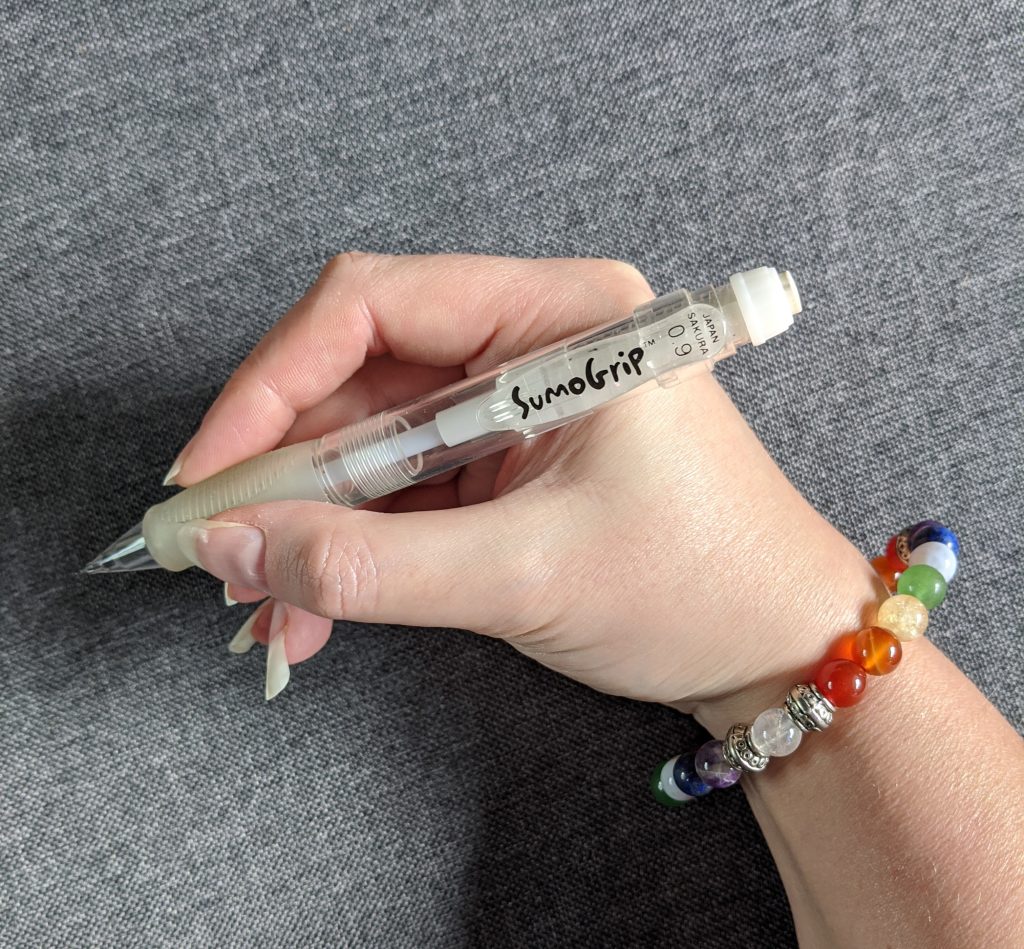
Sakura Sumo Grip Mechanical Pencil
This chunky Sakura mechanical pencil has been my sidekick for many years. It’s large enough to be ergonomic but small enough to store in a bag, pencil case, or drawer.
I’ve had mine since 2015 and it still works (which is more than I can say for most mechanical pencils that break the second you drop them or lose their eraser cap within the first week).
The rubber grip keeps it steady in your hand without impeding your ability to make marks, and the twisting eraser core at the top gives you a lot of room to play and make mistakes.
The eraser twists up from the barrel, and I’ve twisted it up so many times over the years I’ve lost count, and it still hasn’t run out.
The refillable graphite sticks make marks that are easy to see and erase cleanly (the graphite comes off the page instead of just smearing into a gray blob that sticks with your drawing forever).
Strathmore Visual Journal
These visual journals are spiral bound so you can flip to the page you want and start drawing or painting and then close up the book when you’re finished.
Which sounds obvious, but when you’re working in a small space the ability to close something up and put it away is worth more than you’d think.
They come in a variety of sizes, paper weights, and paper types, but I’ve found the 140lb. watercolor journals to be great for both watercolor and mixed media applications (the paper has a nice texture and enough weight to it to handle lots of paint, ink, and water without buckling like a wet napkin).
I’ve gone through three of these in the last two years, and they contain some of my favorite pieces, probably because I wasn’t trying to make anything precious when I made them.

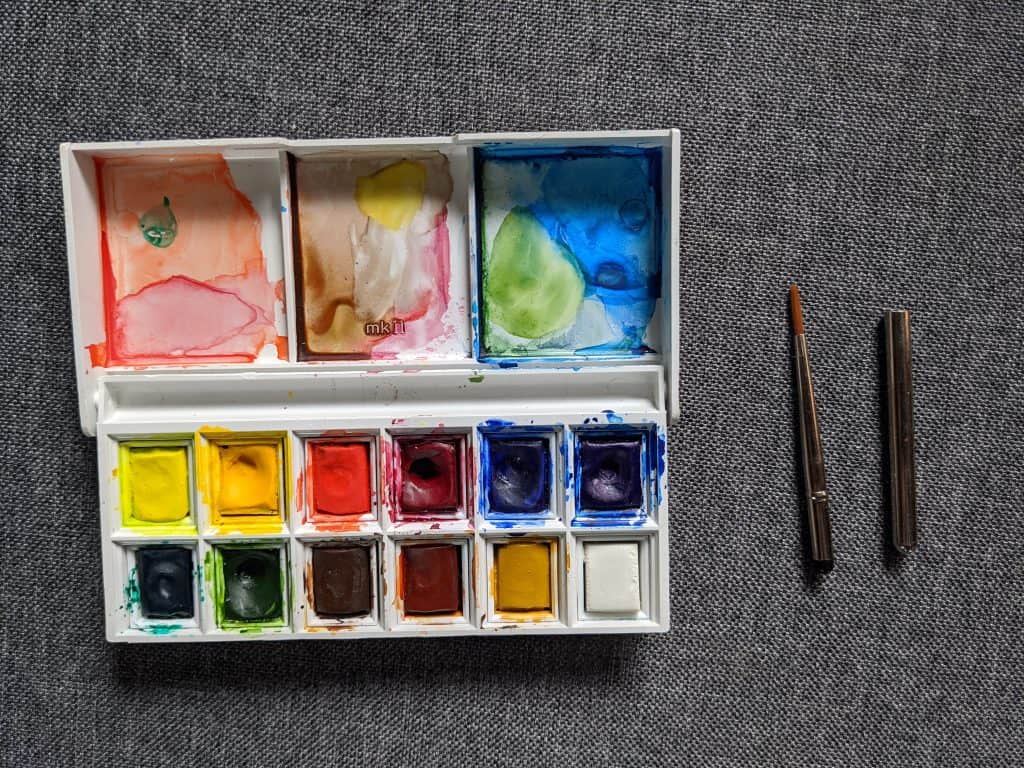
Winsor & Newton Cotman Water Color Pocket Box
This little set of watercolors has been in my bag for years, and I still haven’t run out of paint.
Which makes it both a space-saver and great value for the money (assuming you’re the kind of person who cares about getting your money’s worth out of art supplies. I definitely am, because throwing away half-used tubes of paint makes me feel all the guilt).
It comes with a small paintbrush that’s nice enough to get the job done, but I don’t use it much because the bristles aren’t wide enough to get good washes of color (they’re fine for detail work but if you want to lay down a sky or a background you’ll need a bigger brush).
The paint itself features bright pigments that mix well and look great on the page, and the whole container is small enough to fit in your pocket.
Canvas Paintbrush Roll
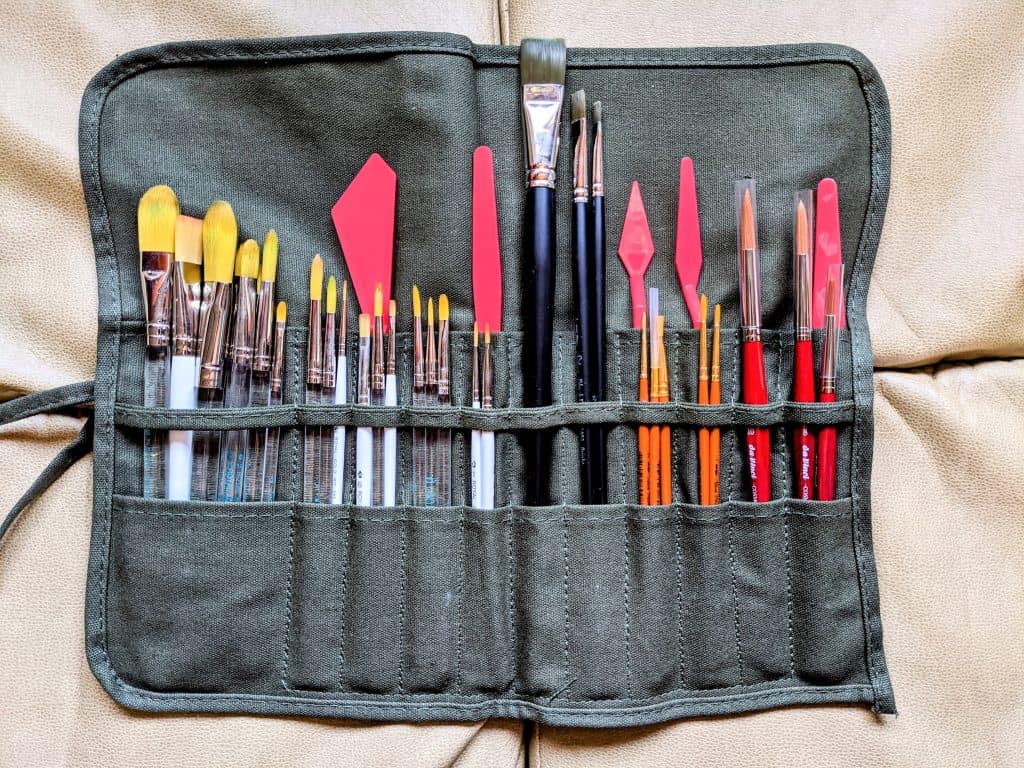
This roll-up brush holder solved a problem I didn’t realize was making my life harder until I got one.
I can unfurl it on any surface, see all my brushes at once, and roll it back up when I’m done (no more digging through a cup or pencil case trying to find the one brush I need).
The pockets are deep enough for bigger brushes but not so cavernous they become black holes where brushes disappear and you forget you own them.
The canvas is sturdy enough to protect the bristles without warping them, and the tie keeps everything secure when it’s rolled up so brushes don’t migrate to the bottom of my bag and emerge three weeks later.
I’ve traveled with mine and it still looks the same as the day I bought it (which is more than I can say for most of my other art supplies).
Pentel Aquash Water Brushes
These water-filled brushes have eliminated approximately 87% of my watercolor excuses (the excuses being: no water jar, no sink nearby, too much setup, too much cleanup, too many things to carry around, and my deep-seated fear of commitment to finishing a painting).
You fill the barrel with water, squeeze gently, and paint. So they’re perfect for RV life, coffee shop creating, or anytime you want to paint without making a big deal out of it.
The barrel holds enough water for a decent painting session, and when you’re done you just cap it and throw it in your bag.
No rinsing, no dumping, and, best of all, no explaining to anyone why you’re carrying around a jar of dirty paint water that looks like you scooped it out of a pond.
While I’ve often wished I could afford a separate studio space (a room with a door I could close, a table I wouldn’t have to clear off before dinner, and maybe even a window that looked out onto something other than another RV), figuring out how to paint and draw in 400 square feet has taught me more than a whole house ever did.
I don’t have room for supplies that sit unused for months, which means I’ve gotten ruthless about the difference between what I need (six brushes, a small palette, paper that fits in a drawer) and what I think I need (seventeen different brush sizes, every color of paint ever made, a dedicated corner just for watercolors, and one of those fancy wooden easels that makes you look like a “real” artist).
So if you’re trying to make art in a small space and feeling like you can’t do it without more room or a better setup or permission from someone who knows what they’re doing, I get it.
But I’m living proof that you totally can, and I hope this post gave you some ideas on supplies that’ll support your small space art ambitions.
When my brain does this, I use that
If your brain runs 12 tabs and forgets what it opened the first one for, this free guide is for you. I’m AuDHD and these are the 10 tools I use every day.
Browser extensions, apps, and websites that work with a neurodivergent brain instead of against it.