
I’d love to tell you this site runs on the power generated from my last hyperfocus session. But since my host only accepts cash money, I use affiliate links for products I love. So if you go on a dopamine-seeking spending spree using my links, I may earn a commission. It keeps this site running (and occasionally funds a new keyboard because I spilled coffee on mine while Googling “how to be a functional adult” at 6 a.m.)
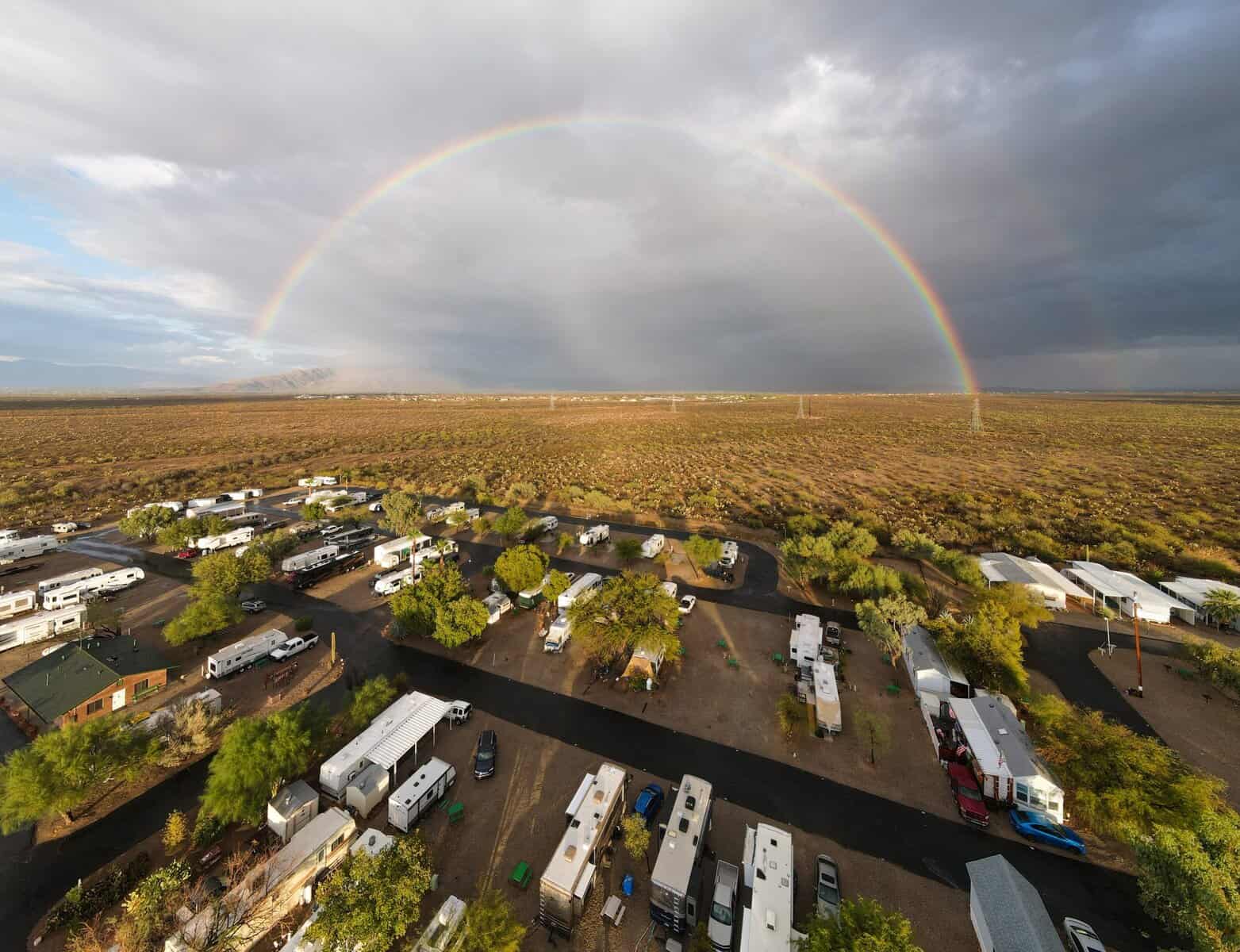
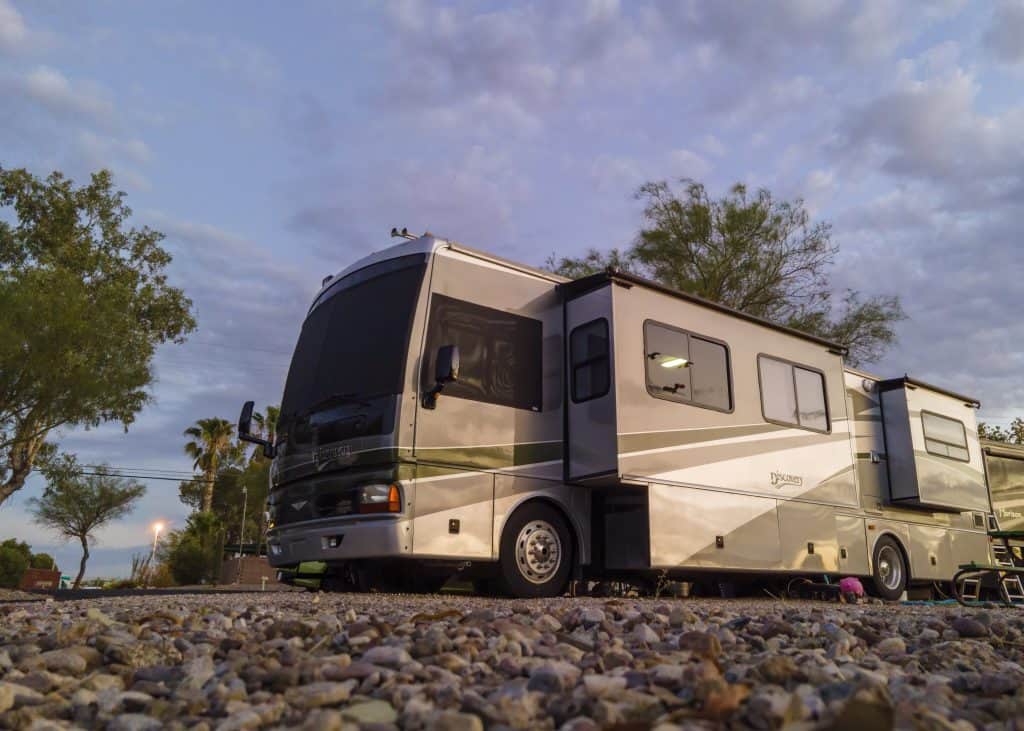
UPDATE, 2026: After nine years in The Diesel Apartment, we moved into a house on an acre in the Sonoran Desert, and the motorhome is heading to its next owner. This post documents the little studio where Peery Creative began and everything I learned about making art when space was measured in inches.
Setting up an RV art studio in 2017 meant giving up everything I thought I needed to make art, and I thought I’d have to stop.
Not because I wanted to, but because I’d spent years believing you needed a proper studio to make artwork.
You needed space. You needed drawers full of brushes organized by size, a closet for finished paintings, and a room with north-facing light where everything looked professional and legitimate.
Then I sold my house (the one with all those things) and drove from Indiana to Tucson with whatever fit in an RV smaller than most people’s bedrooms.
I left behind the gouache tubes, the watercolor paper, the brushes I’d organized like some art-supply librarian taking her job entirely too seriously.
I thought losing my studio meant losing the thing that made me feel like an artist.
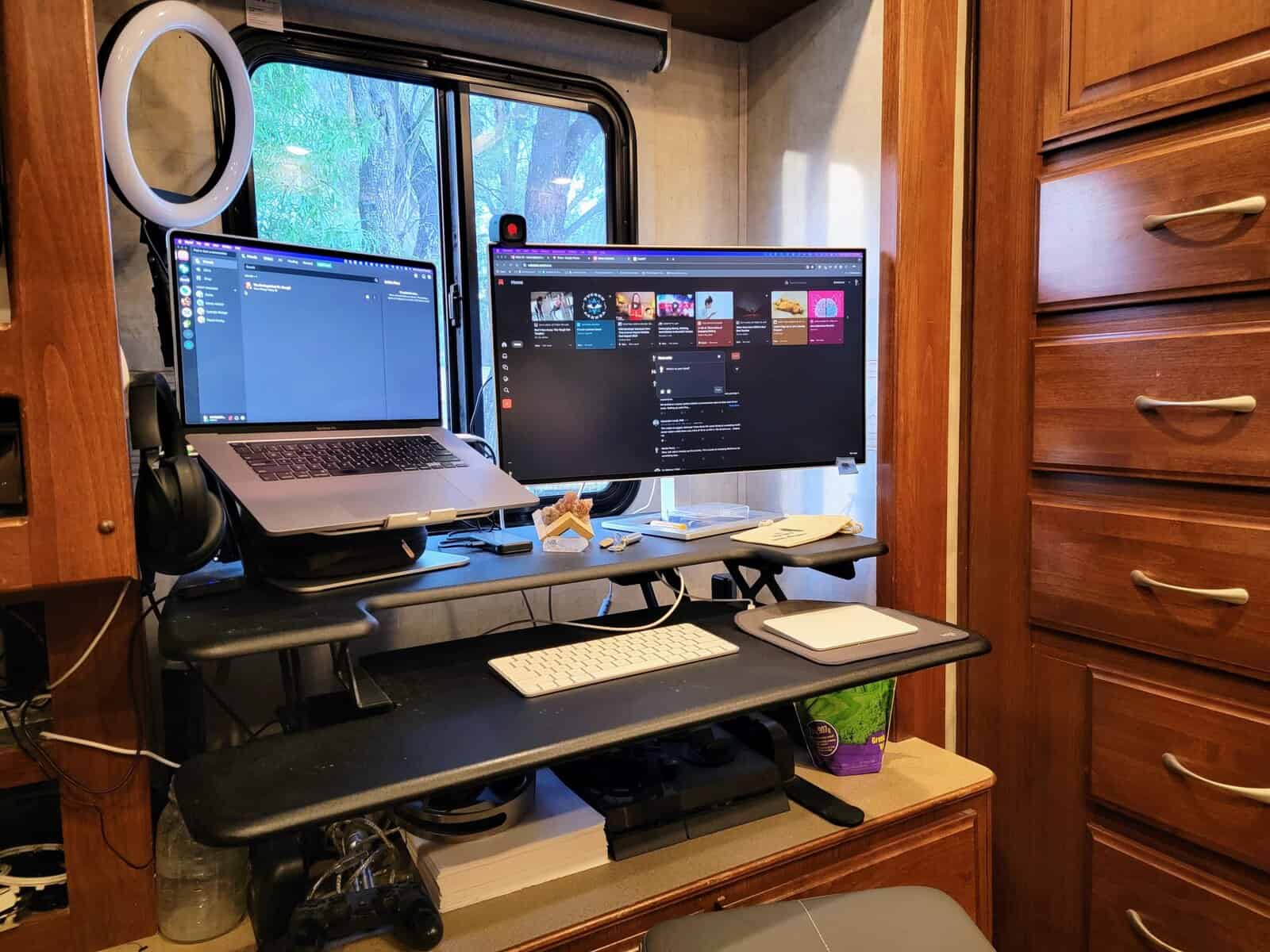
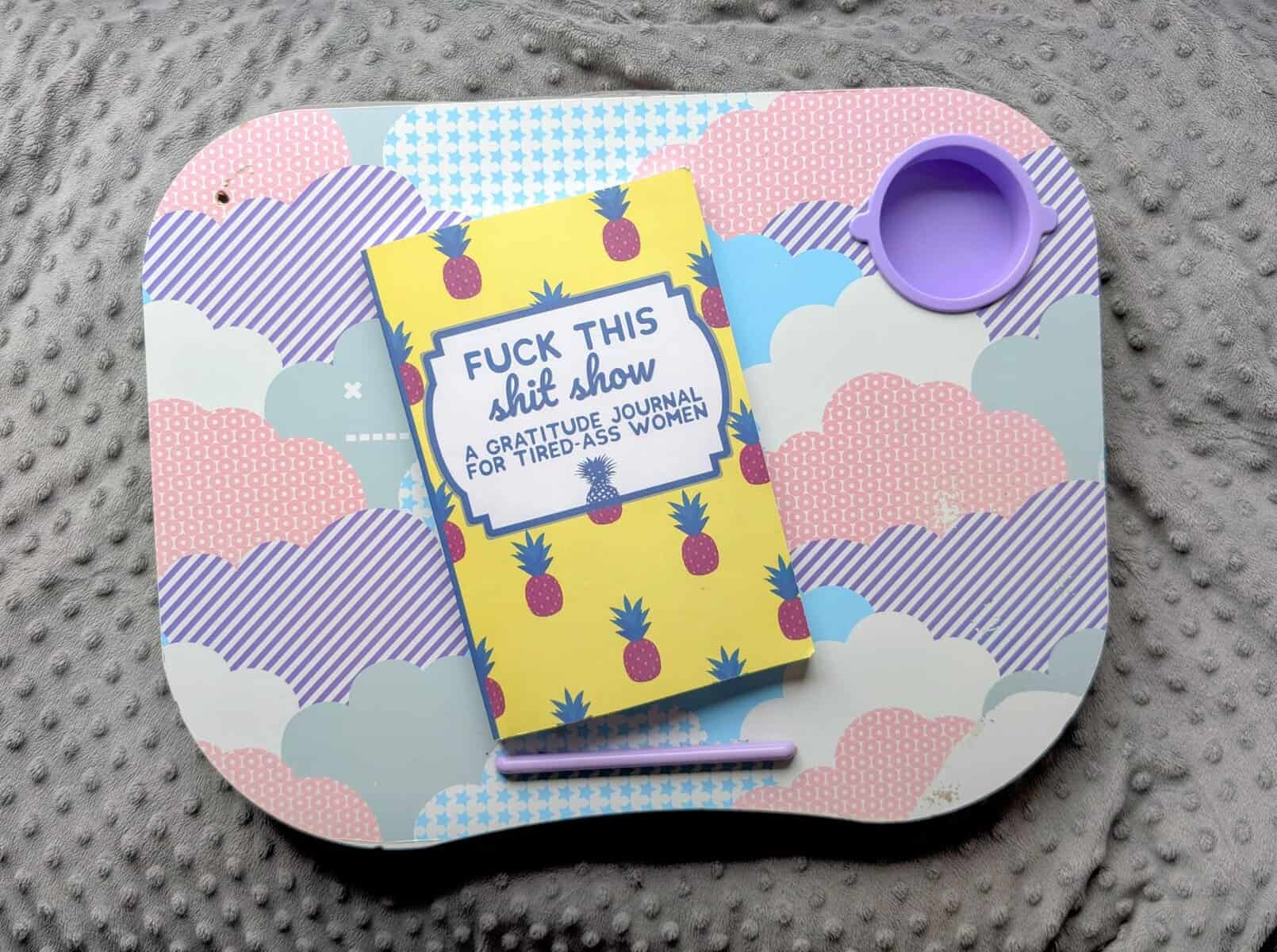
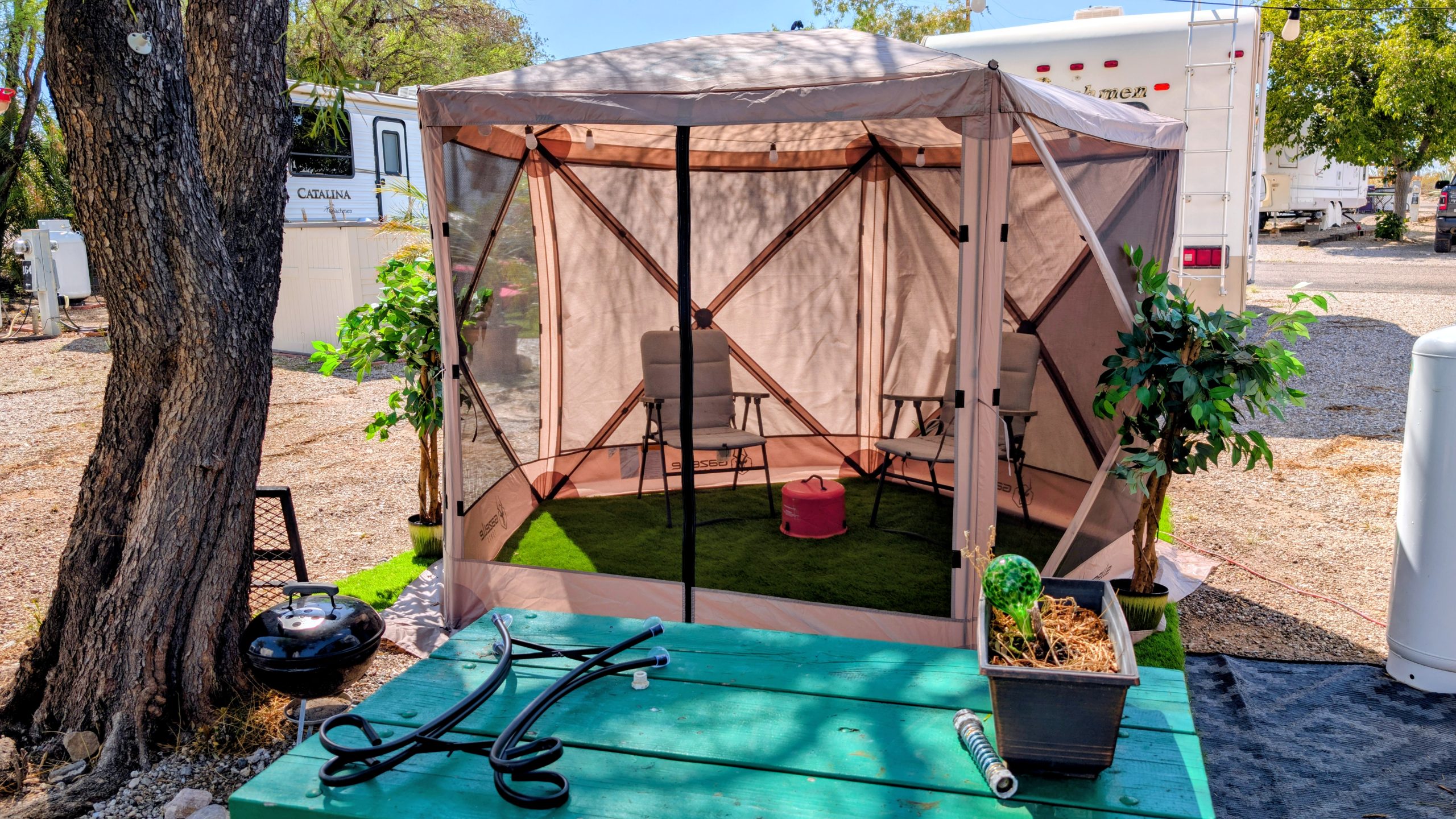
But you know what? I made it work. I set up an IKEA desk between my kitchen and living room. I have a makeshift workspace in the bedroom, set up with a standing desk. A simple and portable lap desk lets me sit on the couch and draw. And a Gazelle gazebo in the yard provides even more space for artmaking.
I’d been lying to myself about what I needed to be a “real” artist.

What My RV Art Studio Looks Like
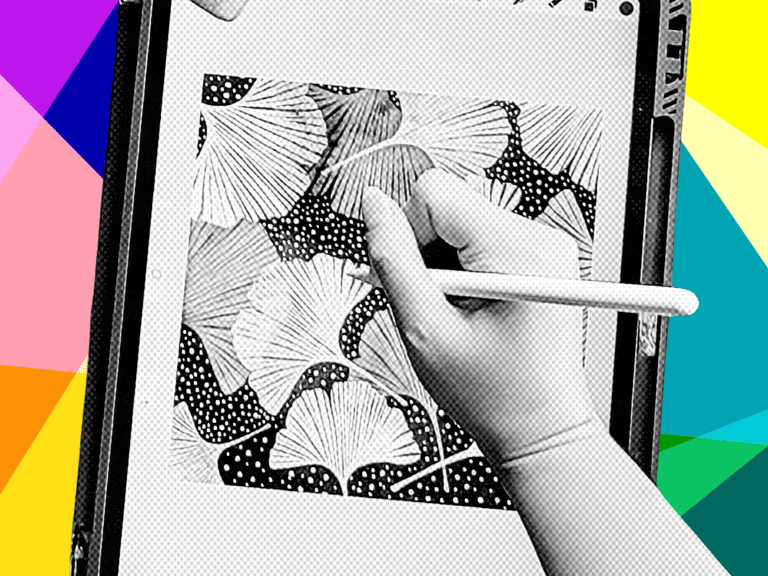
These days, most of my work is done digitally on an iPad with an Apple Pencil and the Procreate app. It’s an entire art studio that fits in a 13-inch rectangle and gives zero fucks if the air is dry or if it’s 100 degrees outside.
Going digital wasn’t a philosophical or artistic choice to evolve my practice or embrace technology. It was practical.
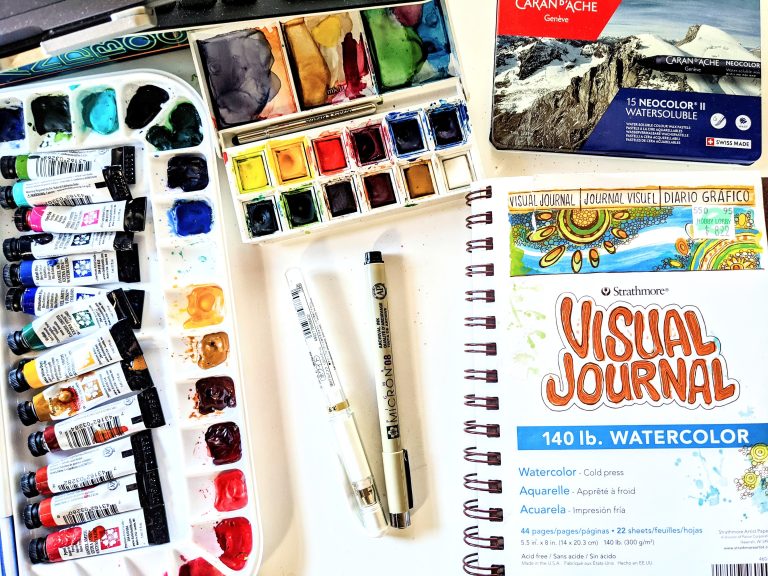
But I still use traditional art supplies sometimes, which means I’m constantly adapting.
Working fast to beat the dry air. Selecting tools that can handle the harsh climate without immediately crumbling. Storing things in airtight containers so they don’t turn into expensive garbage I have to throw away while feeling guilty about the waste.
I have three workspaces depending on what I’m doing and how I’m feeling:
- A makeshift workspace created with a standing desk positioned on a bench in the bedroom for video calls and anything that requires a monitor.
- A lap desk on the couch for working on my iPad or in my Passion Planner.
- A Gazelle gazebo outside for work that requires ventilation (or when I want an easy change of scenery with fresh air).
When I need to force myself into a different environment, I often work from coffee shops or my local library. Because sometimes you need to be around other creatures who aren’t your spouse or hummingbirds engaged in an all-out war over sugar water.

How I Organize Art Supplies in My RV Art Studio
My art supplies live in two collapsible felt baskets shoved under the IKEA desk in the living room. Which is about the only storage space I have that doesn’t require me to engage in a game of advanced Tetris.
Stacked inside those felt baskets are packing cubes. Those darn things come in clutch. Not only have they kept me somewhat organized, but they take the friction out of starting to draw or paint because it’s easy to grab one and get started.
Pens, erasers, and other small supplies live in clear plastic organizers inside the packing cubes. Clear is great because it helps me find what I’m looking for immediately, and keeping them in a container is excellent because it keeps all that stuff from disappearing into the art supply void.
Paint brushes and palette knives go in a canvas brush roll, which keeps the bristles from getting crushed and everything in one place, instead of me having to dig through multiple containers trying to find the right size.
The lap desk stores flat against the wall when I’m not using it, so it doesn’t take up floor space.
The gazebo stays set up year-round because if I had to assemble it every time I wanted to work outside, I’d never use it.
Sometimes being honest about what you will and won’t do means building systems around your limitations instead of hitting yourself with shoulds.
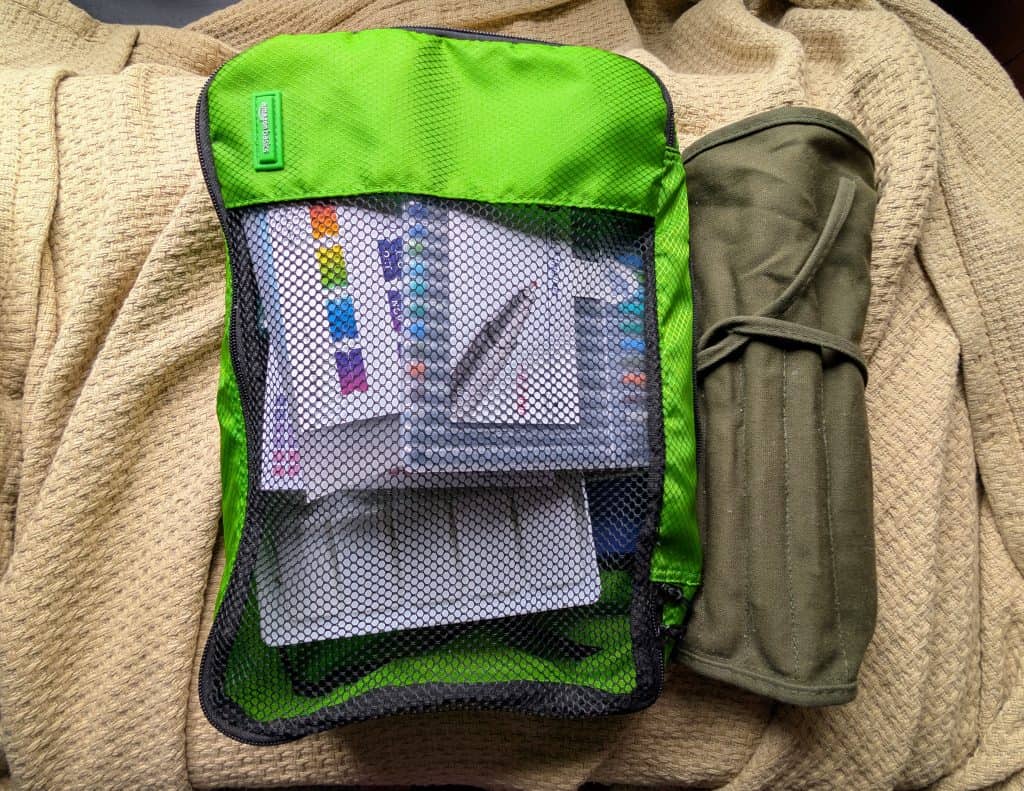 Packing cube and canvas brush roll organizing my pens and paint brushes
 Folding felt baskets are sturdy when in use and easy to fold up and store when you don’t need ’em
 Packing cubes inside foldable felt baskets for RV art studio organization
What It’s Like Making Art From an RV
The desert air comes through the windows, bringing the smell of creosote (and occasionally the neighbor’s joint because my windows don’t discriminate).
Winter (snowbird season) brings the full range of RV park noise. Car alarms go off for no reason at 6 a.m. People holler across the community like they’re trying to communicate with someone three states over. After slamming their car and RV doors fifteen times.
Dogs bark at invisible threats. Noisy trucks rumble up and down the main drag of the RV park. Jets from the Air Force base shake everything, including the mug on my desk that I should have moved because I finished my coffee an hour ago.
Summer is blissfully quiet outside, but both air conditioners run constantly because Tucson in July requires mechanical intervention. But I’ll take air conditioner noise over hearing my neighbors yell into their phone while it’s on speaker.
The good sounds? A yipping chorus of a coyote pack. Hummingbirds making angry noises when another hummingbird dares to exist near the feeder. And sometimes, if I’m working late enough, I hear our pair of Great Horned Owls hoo-hooing back and forth.
But that desert air doesn’t just smell different, it tries to murder your art supplies.
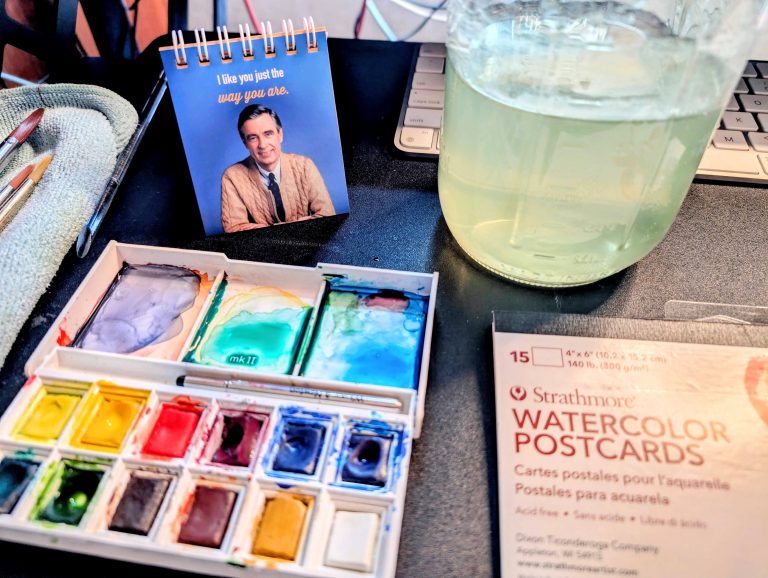
Markers dry out faster than they should. Paint dries on the palette before you can finish a single layer. If you’re working with watercolor or gouache, you have to move quickly, or everything turns into a crusty, unusable graveyard of pigment before you’ve even mixed your second color.
I thought I could work the same way I did in Indiana, where humidity was a given and paint stayed workable for hours.
In Tucson, I have maybe twenty minutes before my palette looks like an archaeological site.
The dry climate affects everything. Drawing pencils feel different on paper that has zero humidity. Water media evaporates before you can blend. Even storage becomes an issue because things dry out in ways they never did in other climates.
What I’ve Learned From Maintaining an Art Practice While Living in a Motorhome
People hear “I live in an RV” and picture cramped, claustrophobic, constantly sacrificing basic comforts for the romantic idea of life on the road. Like I’m some artistic martyr suffering for my craft in a tin can with wheels.
But it’s not like that. It’s a home with everything I need. I can cook, do laundry, bathe, sleep, make art, watch movies, play video games, and do everything I did in a house with a mortgage. Just 300 square feet that costs a fraction of what I was paying for a house.
The space isn’t the limitation I thought it would be. The environment I’m in (the heat, the dry air, the snowbirds who think 7 a.m. is an appropriate time to test their backup beepers) creates challenges. But the space itself? It works.
I don’t miss the extra room or the illusion that having more room would somehow make me more productive or more legitimate as an artist.
I spent years telling myself I needed a proper studio before I could make good artwork, and all that belief did was keep me from making things while I waited for perfect conditions that never showed up.
This isn’t going to be the part where I tell you to follow your dreams, that anyone can do this, or that the obstacles don’t matter if you really want it badly enough.
The obstacles matter. The dry air that destroys supplies, the lack of storage, the neighbor noise, these things are real, and they’re annoying, and they don’t disappear just because you’re passionate about making art.
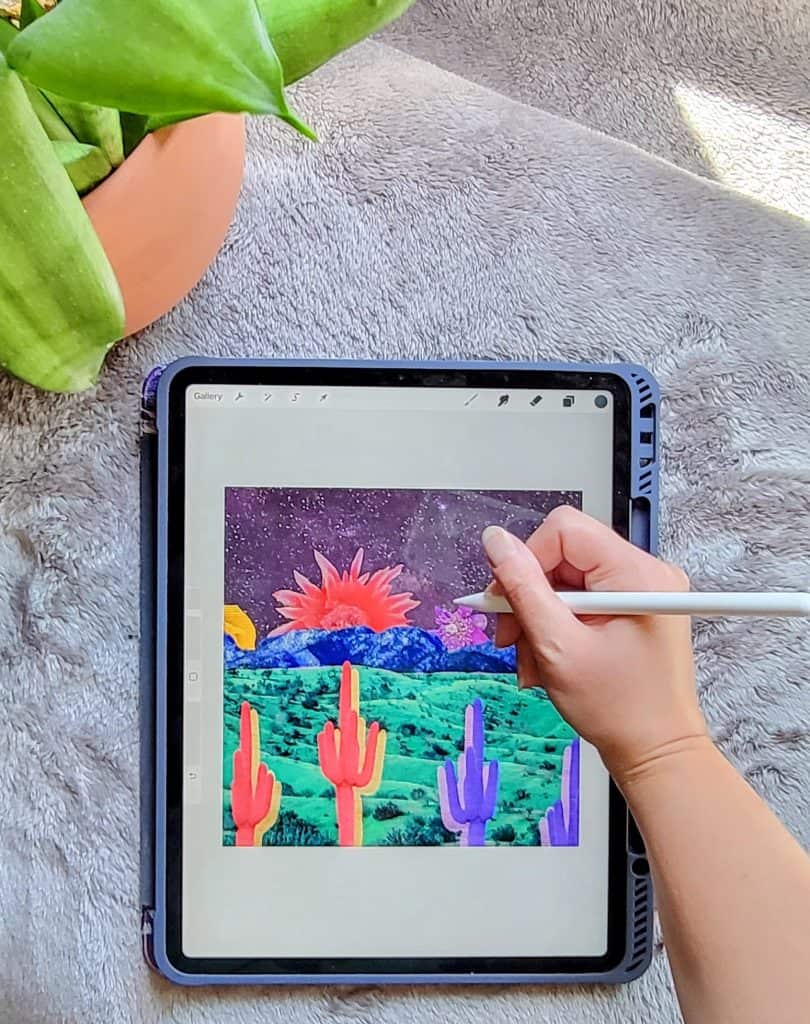
But I’m living proof that you don’t need as much room as you think you do. An iPad and a small desk can replace an entire studio if you’re willing to adapt your process and stop telling yourself you need the perfect setup before you’re allowed to start.
But you know what? I’m just making things in the place I happen to live for the moment, and that takes all the pressure off trying to look like a “real” artist.
My little workspace will never be Instagram-worthy. Most days, my RV art studio looks like a disaster zone where a desk met a laptop that met yesterday’s coffee mug I forgot to wash.
It’s not what I thought I needed when I had a house with dedicated rooms for everything. But every piece of desert art I make now gets made here, in 300 square feet, with supplies stored in felt baskets and an iPad that doesn’t give a flip about humidity.
The RV didn’t make me a better artist. It just made it impossible to keep lying to myself about what was holding me back.


When my brain does this, I use that
If your brain runs 12 tabs and forgets what it opened the first one for, this free guide is for you. I’m AuDHD and these are the 10 tools I use every day.
Browser extensions, apps, and websites that work with a neurodivergent brain instead of against it.